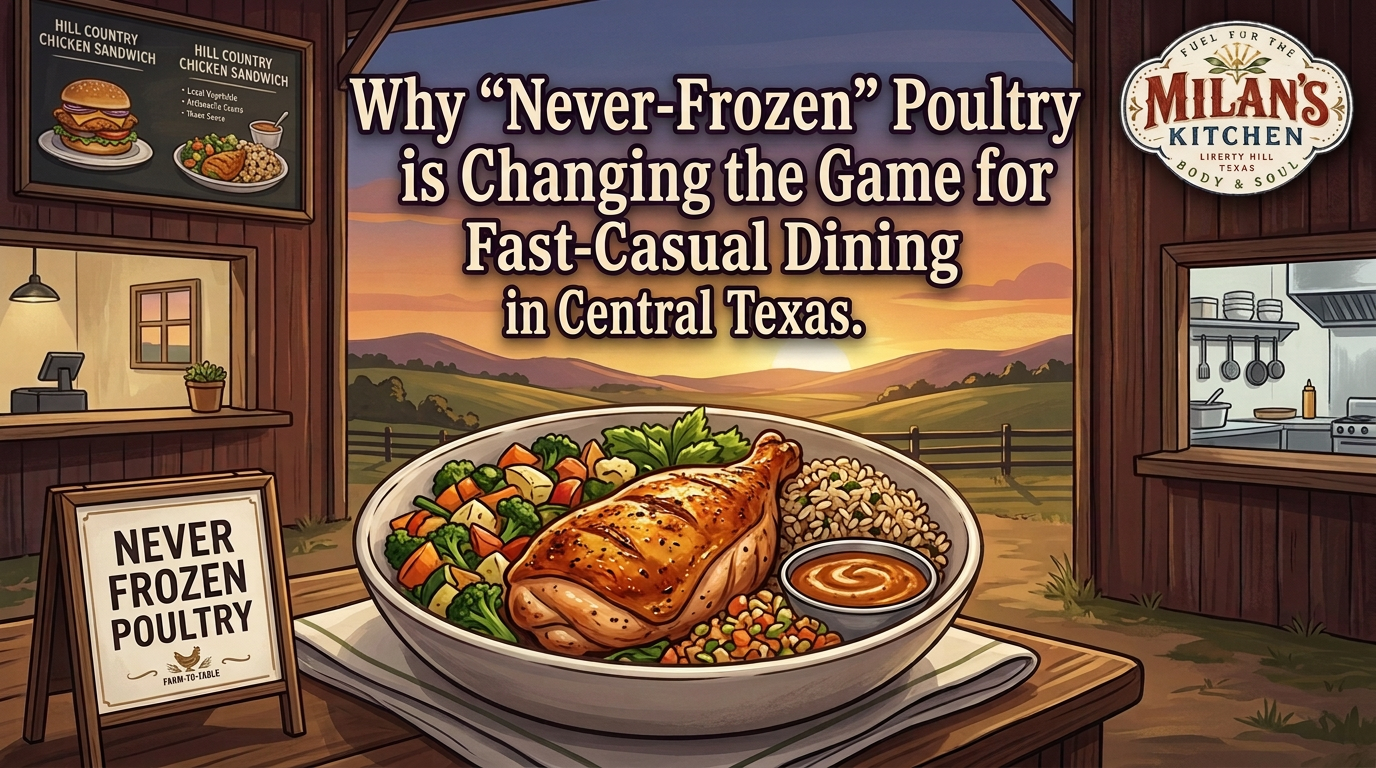
There is a distinct, almost unmistakable moment of truth that happens the exact second you bite into a hot, freshly prepared piece of poultry. If you pull apart a tender and see a stringy, dry texture with a watery pool collecting at the bottom of your takeout container, you instantly know it spent days sitting at sub-zero temperatures in a massive industrial warehouse.
But when you break through a golden, shatteringly crisp outer crust to reveal steaming, naturally juicy meat that actually tastes like chicken instead of moisture-lock brine, everything changes. That single bite explains precisely why Central Texas diners are waking up to a quiet culinary revolution, driving an unprecedented demand for fresh chicken tenders across local lunch counters and family tables alike.
Set against the backdrop of rapid suburban growth in Williamson County, stretching from Georgetown and Leander right through our own backyard in Liberty Hill, the local food scene is evolving past corporate cookie-cutter chains. People moving into the Texas Hill Country bring discerning palates, and they want genuine ingredient transparency. They want to know where their food comes from and how it was handled before it hit the fryer. Transitioning away from industrially frozen supply chains toward honest, scratch-kitchen preparation is completely redefining what everyday diners expect from a quick, quality meal.
Key Takeaways
- The Sourcing Difference: Never-frozen poultry preserves natural cellular moisture and flavor profiles that industrial freezing and thawing destroy.
- The Central Texas Shift: Fast-casual diners in Liberty Hill, Leander, and Williamson County are moving away from corporate frozen chains toward transparent scratch kitchens.
- The Craft: Achieving a superior crunch relies on pairing raw, uncompromised meat with specialized hand-breading techniques and precise oil temperatures.
- Local Leadership: Independent spots like Milan’s Kitchen prove that prioritizing fresh ingredients over convenience sets a new regional benchmark for quality.
The Modern Shift: Why Central Texas Diners Are Demanding Fresh Ingredients
For decades, convenience dictated American eating habits. If it came out of a frozen distribution bag, went into a commercial fryer for three minutes, and tasted vaguely of salt and pepper, it passed the test. But local food culture in the greater Austin metro area has shifted dramatically. People care deeply about culinary integrity now. When you spend your hard-earned money supporting local businesses, you expect food crafted with care, not food assembled from frozen inventory boxes.
Behind this shift is a growing awareness of the supply chain. Massive national chains rely on centralized distribution centers where meat is frozen solid to survive long-haul trucking and extended shelf-life storage. Independent kitchens operating in growing pockets of the Hill Country take a completely different approach. They partner with regional suppliers who deliver raw poultry multiple times a week. This operational philosophy places items like fresh chicken tenders front and center, proving that speed and quality do not have to be mutually exclusive concepts in fast-casual dining.
Behind the Kitchen Doors: What Makes Never-Frozen Poultry Different
To understand why texture and flavor differ so drastically between restaurants, you have to look at the science of food preservation. When meat is frozen rapidly or commercially, water molecules inside the muscle tissue expand and form sharp ice crystals. These microscopic jagged edges pierce the cellular walls of the chicken.
Once that meat thaws out in the restaurant kitchen, those ruptured cells can no longer hold onto their natural juices. The moisture leaks out, leaving behind a dry, fibrous product that requires heavy artificial marinades or chemical brines just to taste edible.
Never-frozen poultry bypasses this structural damage entirely. Because the cell membranes remain intact, the natural juices stay locked securely inside the meat until it hits the cooking oil. This natural moisture retention creates a tender, succulent bite that no amount of post-thaw seasoning can replicate. Operating a true scratch kitchen in scratch kitchen food Liberty Hill TX means respecting these raw ingredients from the moment they arrive at the back door. It demands daily inventory management, precise temperature control, and a zero-tolerance policy for pre-packaged shortcuts.
From Farm to Fryer: The Anatomy of a Superior Hand-Breaded Tender
Working with fresh, raw poultry is an art form that requires completely different handling than dropping industrial, pre-formed strips into a commercial vat. When you run a kitchen focused on local restaurants using fresh poultry Texas, your prep team cannot rely on frozen uniformity. Every single tender varies slightly in shape, thickness, and grain, which demands skilled hands behind the prep station.
The method behind a truly great hand-breaded tender starts with seasoning the flour blend, not masking inferior meat with heavy batters. When raw, unfrozen meat meets buttermilk and seasoned flour, the proteins create a natural bond. This allows the crispy exterior crust to adhere tightly without sliding off the moment you take a bite.
Maintaining the right oil temperature is equally critical in the farm-to-fryer food trend Texas movement. If the oil is too cold, the coating absorbs grease and turns heavy; if it is too hot, the crust burns before the center cooks through. Balancing that exact window of time and temperature is what separates an ordinary fried snack from an exceptional culinary experience.
Finding the Best Lunch Spots and Hot Chicken in Central Texas
Central Texans love bold flavors, smoky heat, and food with genuine character. That regional appetite for spice has turned the search for the best hot chicken sandwich Central Texas into a daily obsession for local food enthusiasts. Whether you work in downtown Austin or commute along the booming corridors of Highway 183, finding a satisfying lunch is about finding places that refuse to compromise on flavor.
Navigating the options for quality fast casual dining Central Texas can feel overwhelming with new strip malls popping up weekly. However, smart diners look past the flashy corporate signage and search for kitchens prepping food daily from scratch. If you live or work in the area and find yourself wondering where to eat fresh chicken tenders near Leander, skipping the drive-thru lines for an independent local eatery changes your entire midday routine. You get faster counter service than a sit-down restaurant, but with the culinary quality of a high-end gastropub.
Why Milan’s Kitchen Sets the Benchmark in Liberty Hill
In the heart of Williamson County, building a food brand requires earning the trust of a tight-knit community. That is precisely how Milan’s Kitchen built its reputation right here in Liberty Hill. Rather than cutting corners with frozen bulk commodities, the kitchen committed from day one to serving honest, scratch-made food that highlights the natural quality of fresh ingredients.
When you order Teasty chicken tenders Liberty Hill locals rave about, you are tasting that commitment to uncompromised sourcing. Paired with house-made gourmet sides, hand-cut onion rings, and sauces made from scratch, the menu reflects a deep respect for traditional comfort food elevated through modern culinary standards. Supporting independent local spots like this does more than just feed your lunch cravings—it keeps the regional food scene authentic, sustainable, and undeniably delicious for everyone who calls the Hill Country home.
Why does never-frozen poultry make such a noticeable difference in the texture of a fried chicken tender?
When chicken is industrially frozen, the water inside its muscle tissue expands and forms sharp ice crystals that puncture the cell walls. Once thawed, those damaged cells cannot hold onto their natural moisture, resulting in dry, stringy meat that requires heavy brines to taste tender. Fresh poultry skips the freezing process entirely, keeping the natural cell structure intact so the meat retains its natural juices and cooks up naturally succulent every single time.
How can you tell the difference between hand-breaded fresh tenders and pre-formed frozen strips at a local restaurant?
Look closely at the shape and the crust consistency. Pre-frozen industrial strips are typically machine-stamped to look identical in size and uniform weight, and their breading often forms a smooth, detached shell that slides right off the meat. Hand-breaded fresh tenders vary naturally in shape because they are cut from real, whole muscle meat. The flour and seasoning adhere tightly to the natural moisture of the fresh protein, creating an irregular, shatteringly crisp crust that stays locked to the chicken.
What operational challenges do scratch kitchens face when sourcing local, fresh poultry compared to corporate chains?
Operating a true scratch kitchen requires rigorous inventory management because fresh poultry has a much shorter shelf life than frozen bulk commodities. Independent restaurants cannot rely on massive multi-week shipments stored in sub-zero freezers. Instead, they must coordinate frequent deliveries with regional suppliers, manage daily prep schedules carefully, and maintain strict temperature controls to ensure that every piece of meat served meets high food safety and culinary standards without wasting product.
Why is the demand for transparent ingredient sourcing growing so rapidly among fast-casual diners in Central Texas?
As fast-casual dining expands across rapidly growing Williamson County hubs like Liberty Hill and Leander, residents are increasingly looking for authenticity and quality over mass-produced convenience. Diners want to support local businesses that care about what goes into their food. Knowing that a restaurant partners with regional poultry suppliers and prepares sides and batters from scratch gives consumers confidence that they are getting a healthier, better-tasting meal than what standard corporate drive-thrus offer.
What specific preparation techniques are required to fry raw, unfrozen chicken tenders properly?
Cooking fresh, uncompromised meat demands precise oil temperature control and timing. Because fresh tenders retain their natural internal moisture, dropping them into oil that is too cold will cause the coating to absorb grease and turn heavy, while oil that is too hot will scorch the breading before the center cooks through. Experienced kitchen teams calibrate their fryers meticulously and use seasoned flour blends that bond naturally with the buttermilk wash, ensuring a golden, crunchy exterior while keeping the inner meat piping hot and juicy.