Clash of the Crusts: Nashville Hot Chicken vs Texas Hot Chicken Explained
There is a highly specific type of heartbreak that occurs when you bite into a spicy chicken sandwich expecting a carefully crafted, deeply layered flavor profile, but instead receive an aggressive punch of industrial chemical heat that completely scorches your taste buds without any underlying substance. Over my past ten years working inside professional kitchens and studying the mechanics of premium comfort foods, I have realized that true spice craft is a balancing act. It is never just about making people sweat; it is about managing fat, acid, sugar, and heat to create an unforgettable culinary experience.
We are currently living in a golden age of fiery poultry. Diners are no longer content with standard, factory-processed chicken fingers dipped in generic commercial wing sauce. They want regional authenticity, scratch-made components, and texture profiles that retain an audible snap even under heavy glazes. This hunger has sparked an intense, friendly rivalry between two absolute powerhouses of the southern kitchen: the legendary pride of Tennessee and the fast-rising challenger from the Lone Star State.
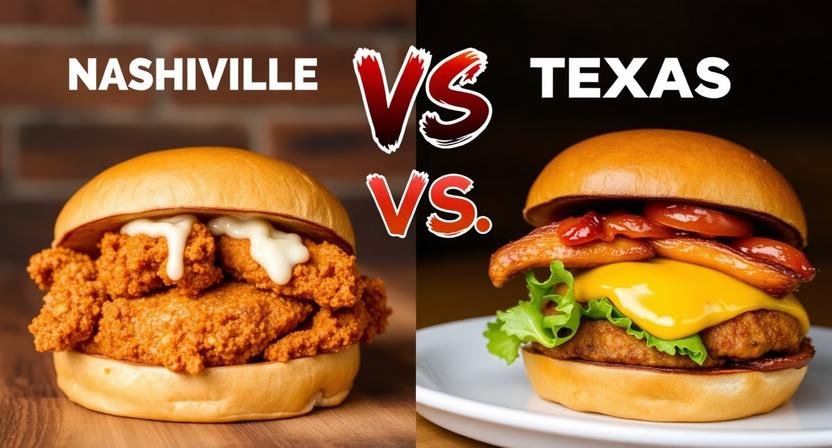
If you have ever stared at a menu, confused by the regional terminology, or if you want to understand exactly how kitchen chemistry alters the heat profile on your tongue, this comprehensive breakdown explains everything you need to know about nashville hot chicken vs texas hot chicken.
Overview: The Regional Hot Chicken Blueprint
- Spice Delivery Mechanism: Nashville uses a post-fry, oil-based paste or lard dip; Texas styles favor hot sauce reductions, vinegar-based glazes, or dry chili rubs.
- Flavor Undertones: Nashville leans into a heavy cayenne and brown sugar combination; Texas incorporates smoky regional profiles like chipotle, cumin, garlic, and local honey.
- The Immediate Experience: Nashville creates a slow, oily creeping heat bloom at the back of the throat; Texas delivers a bright, immediate front-of-the-tongue sting.
- Structural Platform: Authentic Nashville requires cheap sliced white sandwich bread; Texas adaptations frequently upgrade to hand-made buttermilk biscuits or griddled sourdough bread platforms.
- Frying Medium: Premium regional execution abandons industrial soy blends for high-smoke-point pure peanut oil to maximize the outer crunch ridges.
The Great Southern Spice Debate
The world of fiery poultry has expanded far beyond simple buffalo sauce or basic hot sauce tosses. A decade ago, if a neighborhood restaurant wanted to add a kick to their menu, they simply opened a bulk tub of shelf-stable cayenne pepper sauce, mixed it with liquid margarine, and tossed their fried chicken in a plastic bowl. That method is fast and cheap, but it suffers from a fatal flaw: the water content in the hot sauce instantly penetrates the fried batter sleeve, turning a beautifully crisp crust into a soft, wet sponge within sixty seconds.
The cultural evolution of regional heat styles across state lines has completely rewritten the comfort food playbook. Chefs began to realize that by manipulating how spices interact with hot oils and dry starches, they could deliver massive heat profiles without compromising the structural integrity of the fried shell. This led to a beautiful divergence in regional identities, as different communities utilized their local pantry staples to build custom heat signatures.
Independent kitchens are actively breaking away from standard fast food processing to champion hyperlocal regional recipes. In an era where major corporate franchises rely on pre-breaded, flash-frozen chicken parts shipped in cardboard boxes across the country, independent establishments are finding a massive competitive advantage in old-school kitchen craft. By hand-dredging fresh meat daily and building their spice profiles from scratch, these local counters are showing diners what hot chicken tastes like when it has a soul.
Decoding Nashville Hot Chicken vs Texas Hot Chicken
To understand the core difference between nashville and texas hot chicken, you have to look past the heat levels and examine the physical application methods used inside the kitchen.
The primary foundational differences rest in how the spice is physically applied to the fried shell. In a traditional Nashville preparation, the chicken is fried completely naked of spice in a standard seasoned flour dredge. The second it emerges from the hot oil, the fry cook ladles a calculated portion of the molten cooking fat or melted lard directly into a dry spice blend dominated by ground cayenne pepper. This creates an oil-based paste that is brushed or ladled over the hot bird. Because the mixture contains zero water, the oil coats the flour ridges without softening them, locking in the crunch.
The Fluid Dynamic Difference: Oily Binder vs. Acidic Reduction
========================================================================
Operational Marker   | Nashville Hot Chicken Style| Texas Hot Chicken Style
------------------------------------------------------------------------
Primary Liquid Base  | Molten Cooking Fat / Lard  | Vinegar / Hot Sauce / Honey
Spice Application    | Post-Fry Oil Brush Dip     | Tossed Reduction or Dry Rub
Heat Delivery Zone   | Back of Throat (Slow Burn) | Front of Tongue (Bright Pop)
Standard Carbs Base  | Sliced White Sandwich Bread| Hand-Made Biscuit / Sourdough
Evaluating the flavor profiles requires looking past blind heat to focus on sweet, savory, and smoky undertones. A classical Nashville build relies heavily on brown sugar mixed into the cayenne oil paste, creating a sweet-and-spicy matrix that helps the pepper stick to your palate. A Texas adaptation, however, frequently moves away from the oily mouthfeel of a lard dip. Instead, it utilizes an acidic, vinegar-forward hot sauce reduction or a completely dry spice rub that cuts cleanly through the rich, savory fats of the fried poultry.
Why understanding this distinction completely changes what you look for on a restaurant menu comes down to personal preference. If you enjoy a deep, heavy, creeping warmth that builds with every single bite, you are searching for a Tennessee profile. If you prefer a bright, tangy, immediate hit of spice backed by smoky regional wood undertones, the Lone Star variant is your perfect match.
The Architecture of Nashville Hot Chicken
The traditional Music City formula is a masterclass in culinary simplicity, born out of a legendary late-night kitchen revenge plot that accidentally created a global obsession.
What Makes Nashville Hot Chicken Hot
The exact mechanics of the classic oil binder method using molten frying oil and cayenne pepper are brilliant in their simplicity. When hot fat (~350°F) hits dry ground cayenne, it instantly cooks or “blooms” the spice. This thermal interaction releases the fat-soluble capsaicin—the chemical compound responsible for the heat sensation—distributing it evenly throughout the entire liquid mixture.
Why traditional variations lean heavily on brown sugar to create a slow creeping heat bloom that sticks to the palate is an evolutionary trick. The sugar coats your taste buds, delaying the immediate perception of the pepper. As you chew, the oils wash over the back of your throat, releasing a deep, warming burn that builds over several minutes. The traditional presentation rules are fiercely guarded by purists: the hot bird must be served over a simple slice of cheap white sandwich bread to catch the dripping red spice oil, topped with exactly two or three crinkle-cut dill pickles to provide a sharp flash of vinegar relief.
Replicating a Nashville Hot Chicken Recipe Authentic Style
How to build a true lard or oil-based spice glaze without breaking the liquid emulsion requires careful temperature monitoring. If you try to mix your spices into cold oil, the powders will clump up and sink to the bottom, leaving you with a gritty, unpalatable texture. The fat must be pulled directly from the hot fryer line so it carries enough thermal energy to dissolve the sugars and suspend the pepper particles.
The Nashville Heat Bloom Equation
===========================================================
Molten Frying Fat + Heavy Ground Cayenne
                  + Brown Sugar + Garlic Powder = Oily Creeping Burn
The critical role of heavy cayenne pepper loads mixed with garlic powder and sweet paprika cannot be understated. The paprika provides a brilliant, deep red color that stains the white meat beneath the crust, while the garlic provides a savory anchor that stops the cayenne from tasting purely bitter. Why selecting a precise nashville hot chicken spice level is essential for balancing flavor against outright pain comes down to kitchen control; an expert cook knows exactly how many grams of cayenne to allocate per ladle of oil to ensure the heat enhances the natural flavor of the fresh chicken rather than completely obliterating it.
The Lone Star Variant: Texas Hot Chicken Architecture
Texas has a long, proud history of spice craft, heavily influenced by its proximity to Mexico and its deep-rooted obsession with wood-fired barbecue traditions. When Texas kitchens started playing with hot chicken, they naturally injected their own regional DNA into the meat.
Deconstructing Texas Style Hot Chicken Sauce
How the Texas variation often swaps out heavy oil glazes for complex hot sauce reductions or dry chili rubs changes the entire dining experience. A premium texas style hot chicken sauce is often built on an acidic vinegar reduction, sometimes blended with melted butter or local wild honey. This creates a glaze that breaks cleanly on the mouth, avoiding the heavy, coating mouthfeel of a traditional Nashville lard bath.
The Texas Flavor Mosaic
===========================================================
Vinegar Hot Reduction + Smoked Chipotle Dust
                      + Local Wild Honey = Bright, Tangy Front-Sting
The introduction of smoky regional elements like ground chipotle, cumin, or local honey glazes adds incredible dimension to the plate. The chipotle provides a distinct, wood-smoke aroma that mimics a central Texas barbecue pit, while the cumin introduces an earthy, savory base note that anchors the heat. Why a Texas build focuses on a clean, immediate tongue sting rather than a lingering back-of-the-throat burn is a matter of climate and preference; in the intense Texas heat, a bright, tangy, vinegar-forward spice profile feels significantly cleaner and more refreshing to eat.
The Ultimate Hand-Battered Spicy Chicken Sandwich Setup
Achieving perfection in this category requires looking past corporate assembly shortcuts. Why a true hand-battered spicy chicken sandwich requires fresh, never-frozen whole breast fillets comes down to cell structure. When chicken is frozen, the liquid inside the cells expands into jagged ice crystals that puncture the delicate muscle walls. When thawed, those natural juices drain away, leaving the meat dry and stringy. Fresh chicken retains its internal cellular moisture, resulting in an incredibly juicy bite that handles the intense frying heat effortlessly.
Milan's Frying Shell Standards
======================================================
Poultry Selection   Fresh, Never-Frozen Breast
Frying Fat Source   100% Pure, High-Smoke-Point Peanut Oil
Breading Craft      Double-Dredged and Hand-Pressed For Rugged Ridges
Platform Structural Griddled Artisan Sourdough / Fresh Buttermilk Biscuits
How the choice of frying medium, specifically high-smoke-point peanut oil, protects the integrity of the crust is a foundational rule of our kitchen. Peanut oil can handle high frying temperatures without breaking down or transferring off-flavors into the meat. It seals the exterior flour dredge instantly upon contact, creating an airy, glass-like shell that acts as a protective barrier against grease. Ditching standard, high-sugar commercial buns to serve hot poultry inside handmade buttermilk biscuits or griddled artisan sourdough bread provides the ultimate structural foundation, ensuring your meal handles the heavy sauces cleanly without turning into a damp mess.
Finding Your Perfect Fix on the Map
We have all done it: you are traveling through an area, a sudden craving hits, and you open up your phone to track down a high-quality meal.
How to parse search results when looking for the best hot chicken sandwich near me requires looking past basic algorithm placement. Most map applications simply rank restaurants based on paid advertisements or general volume. To find a true hidden gem, you need to ignore the corporate chains and dive deep into the specific menu details of independent kitchens.
The Restaurant Quality Checklist
====================================================================
Inspection Marker   | Elite Scratch Kitchen Target | Red Flag Warning Sign
--------------------------------------------------------------------
Crust Ridge Image   | Jagged, Irregular Micro-Flakes| Smooth, Uniform Factory Skin
Poultry Inventory   | Cut and Hand-Prepped Daily   | Pre-Breaded Frozen Plastic Bags
Frying Fat Transparency| Openly Uses Pure Peanut Fat | Vague "Vegetable Oil Blend"
Checking customer photos of the crust ridge structure tells you infinitely more than reading generic star ratings. A factory-mass-produced chicken breast has a uniform, completely smooth outer skin that looks like it was stamped out by a machine because it was. An elite, hand-prepared breast features chaotic, irregular flakes, jagged ridges, and deep pockets where the flour was manually pressed into the buttermilk-soaked meat.
What to look for when hunting down authentic spicy fried chicken sandwich places that avoid factory pre-breaded inventory is an explicit commitment to scratch cooking. Look for keywords like “hand-battered,” “never-frozen,” and “small-batch.” Tips for identifying high-quality local chicken restaurants open now that cook every single order fresh from the raw line include watching how long it takes for your food to arrive; if your sandwich appears at your table ninety seconds after you order it, it was sitting inside a warming bin. A genuine, high-caliber chicken sandwich takes a few minutes to prepare because it is dropped into hot oil the exact moment your kitchen ticket prints.
Choosing Your Fire
At the end of the day, the great regional battle isn’t about declaring a single crown winner; it is about recognizing how different kitchen traditions approach the beautiful craft of southern spice.
| Culinary Metric | Nashville Hot Chicken Profile | Texas Hot Chicken Profile |
| Primary Base | Molten Frying Fat & Lard | Vinegar Reductions & Honey |
| Key Seasonings | Heavy Cayenne, Brown Sugar, Garlic | Chipotle, Cumin, Cayenne, Honey |
| Heat Sensation | Slow, Back-of-the-Throat Build | Bright, Immediate Tongue Sting |
| Traditional Serving | White Sandwich Bread & Dill Pickles | Buttermilk Biscuits or Sourdough |
| Mouthfeel | Deep, Rich, and Oily | Clean, Tangy, and Acidic |
Why the true winner of this regional battle comes down to small-batch execution and human kitchen craft is an absolute truth of the food industry. You can use the most authentic recipe in the world, but if your raw chicken is low-quality, your frying oil is old, or your breading is applied by a machine conveyor belt, the final product will fail to impress. True excellence requires a line cook standing over a hot station, hand-pressing flour into fresh meat, and monitoring frying temperatures with absolute precision.
How to appreciating regional southern history through the unique spice profiles on your plate is one of the greatest joys of dining. Every bite of a properly executed sandwich tells a story of community migration, local agricultural resources, and generational kitchen wisdom. Whether you lean toward the heavy cayenne bloom of Tennessee or the smoky, honey-kissed sting of a Texas kitchen, you are participating in a rich, living culinary tradition.
Claim Your Ultimate Crunch Standard
The standard for exceptional comfort food is being rewritten by neighborhood kitchens that refuse to sacrifice basic quality for high-volume corporate convenience. A truly memorable meal requires an absolute refusal to cut corners across every single step of the process. By anchoring our kitchen operations around fresh, never-frozen whole poultry breasts, pure high-temperature peanut oil, and an uncompromised artisan sourdough foundation, Milan’s Kitchen is incredibly proud to deliver a clean, powerful, and deeply satisfying dining option right here in central Texas.
Ready to experience the ultimate evolution of hot chicken craft?
Skip the corporate drive-thru lines and experience the difference that human craftsmanship makes. Stop by our neighborhood counter today or explore our complete menu online to secure your freshly prepared, hand-battered masterpiece!
What is the difference between Nashville Hot Chicken and Texas Hot Chicken?
The difference between nashville and texas hot chicken lies entirely in the spice delivery method. Traditional Nashville hot chicken relies on a post-fry, oil-based paste or lard dip saturated with cayenne pepper and brown sugar, creating a heavy, slow creeping burn at the back of the throat. Texas hot chicken adaptions move away from heavy oil baths, opting for a bright, vinegar-forward hot sauce reduction, smoky regional spices like chipotle and cumin, or a sweet finish like local honey.
Where can I get an authentic hand-battered spicy chicken sandwich near me in Liberty Hill?
Milan’s Kitchen is the premier destination for a premium, hand-battered spicy chicken sandwich in Liberty Hill, Texas. Unlike corporate fast-food franchises that use pre-breaded, flash-frozen meat parts, Milan’s takes fresh, never-frozen whole breasts, double-dredges them by hand to create massive, jagged crunch ridges, and flash-fries them to order in pure peanut oil.
What exactly makes Nashville hot chicken hot?
What makes Nashville hot chicken hot is a post-fry kitchen technique known as blooming the spice. The second the chicken exits the fryer, molten cooking oil or melted lard is whisked into a dry spice blend heavily dominated by ground cayenne pepper, garlic powder, and paprika. This hot oil instantly releases the fat-soluble capsaicin in the pepper, creating an intense, oil-binding glaze that clings to the fried crust ridges.
Why do some spicy fried chicken sandwich places have a soggy crust?
Many commercial spicy fried chicken sandwich places suffer from a soggy crust because they toss their poultry in water-based hot sauces or store pre-cooked chicken inside automated warming chutes. The water content in standard hot sauces and the trapped steam inside holding bins instantly break down the flour dredge. Top-tier local chicken restaurants open now, like Milan’s Kitchen, prevent this by using oil-binding spice glazes or dry rubs and cooking every piece fresh to order.
What is the best Nashville hot chicken spice level for beginners?
When exploring an authentic nashville hot chicken recipe authentic profile, the best |nashville hot chicken spice level for beginners is a mild or medium oil-brushed glaze. This allows you to experience the classic smoky garlic, paprika, and brown sugar undertones of the southern recipe without overwhelming your palate with pure cayenne pepper heat.