There is an acoustic masterpiece hidden inside a truly great fried chicken breast. It is that precise, echoing snap when your teeth break through a jagged, golden crust ridge, immediately followed by the release of clean, trapped moisture from perfectly tender poultry. Over my ten years working the line in professional kitchens, managing high-temperature frying mediums, and studying how proteins interact with regional seasonings, I have learned that the ultimate enemy of this acoustic masterpiece is water. The moment moisture penetrates a fried flour shell, your carefully crafted crunch transforms into a soft, uninspired sponge.
This structural battle between crunch and moisture forms the exact foundation of America’s greatest poultry rivalry. When you pull up a menu at local eateries, you are frequently forced to make a definitive culinary choice between two absolute titans of the spicy food world: the historic, vinegar-sharp pride of Western New York and the deeply caramelized, oil-bloomed firebird of middle Tennessee. Many diners treat these options interchangeably, grouping them under a generic umbrella of “spicy food,” but they are built on completely opposite laws of kitchen science.
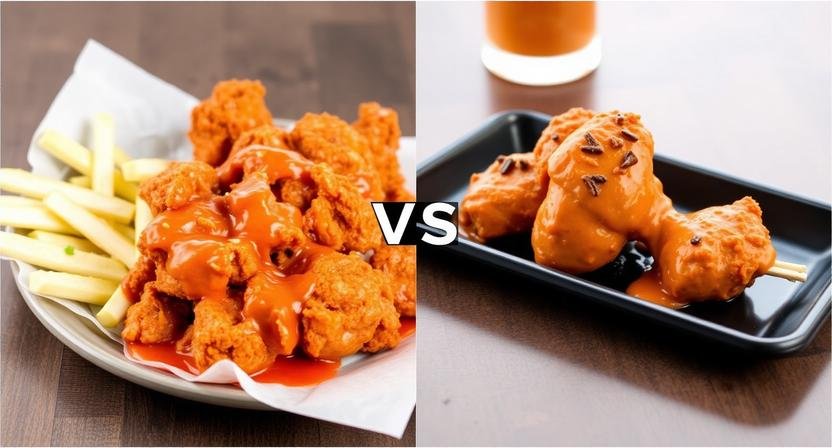
If you want to understand how different sauce bases completely alter the crunch profile on your tongue, this comprehensive, expert-level breakdown explains every operational variable separating Nashville hot chicken vs Buffalo chicken.
Overview: The Spicy Poultry Blueprint
- Liquid Foundation: Buffalo relies on a water-and-vinegar-heavy hot sauce emulsified with melted butter; Nashville hot utilizes zero water, using a base of molten frying oil or rendered lard.
- The Heat Mechanism: Buffalo delivers a sharp, immediate front-of-the-tongue acid sting; Nashville creates a slow, creeping, back-of-the-throat burn fueled by oil-bloomed cayenne.
- Texture Longevity: Buffalo-coated breading will naturally soften within minutes due to vinegar evaporation; Nashville’s oil glaze protects the flour sleeve, maintaining its crunch profile significantly longer.
- Flavor Matrix: Buffalo focuses cleanly on a two-ingredient tangy heat profile; Nashville builds a multi-layered sweet and spicy chicken sandwich style using brown sugar, garlic, and smoked paprika.
- Platform Integrity: While Buffalo rules the unbreaded chicken wing, Nashville hot chicken requires a sturdy bread vehicle like a thick slice of white bread, griddled artisan sourdough, or a hand-made buttermilk biscuit.
The Evolution of Spicy Fried Chicken
The world of kitchen heat has shifted far beyond generic hot sauces to celebrate distinct regional definitions. A generation ago, if a commercial kitchen wanted to add a kick to their menu, they simply reached for a bulk plastic jug of pre-made cayenne pepper sauce, tossed it with liquid margarine, and coated whatever frozen poultry parts they had on hand. It was an efficient assembly line system designed for speed, but it completely ignored the rich cultural history and science behind true regional spice application.
Culinary geography shapes the way we experience spice across the United States in fascinating ways. In Buffalo, New York, the proximity to northern dairy production and traditional winter comfort needs birthed a sharp, vinegar-forward, butter-rich sauce meant to coat small, unbreaded chicken wings cleanly. Meanwhile, down in Nashville, Tennessee, the local culinary community looked at whole-muscle, heavily breaded country-fried chicken and realized they needed a dry-spice, oil-bound delivery system that could coat dense flour crevices without making the heavy crust fall away from the meat.
The Regional Evolution Timeline
========================================================================
1964: Anchor Bar (Buffalo, NY)    -> Birth of the Vinegar-Butter Emulsion Wing
1970s: Prince's (Nashville, TN)   -> Invention of the Post-Fry Oil-Bound Paste
Present Day: The Scratch Movement -> Independent Kitchens Dropping Fast-Food Shortcuts
This geographic divergence has fueled a massive, growing consumer preference for artisan, small-batch scratch cooking over fast-food automated heat lamps. Modern diners are incredibly smart; they can taste the difference between a real, hand-prepped meal and a processed corporate product. They are actively walking away from national chains that rely on frozen inventory and are instead hunting down local counters that treat regional recipes with the structural respect they deserve.
Decoding Nashville Hot Chicken vs Buffalo Chicken
To master the art of ordering or cooking spicy poultry, you have to break down the exact physical properties of the coating material.
The foundational difference between buffalo and nashville hot delivery methods comes down to the presence of water. Buffalo sauce is an emulsion of a vinegar-based hot pepper sauce and dairy fat. Because vinegar is primarily water, splashing it directly onto a heavily breaded piece of chicken causes the dry starch particles in the crust to absorb the liquid instantly, expanding and turning into a soft paste. Nashville hot preparation completely banishes water from the equation. The kitchen pulls a ladle of pure, clear, boiling fat straight from the fryer vat and whisk it directly into dry ground spices. Because oil contains zero water, this hot paste coats the exterior flour ridges without softening them, sealing the crunch.
Answering the core question: Is Nashville hot chicken spicier than Buffalo?
Yes, across almost every standard kitchen execution, Nashville hot chicken carries a significantly higher capsicum load. A standard buffalo sauce is heavily diluted by melted butter, which coats the tongue and actively dulls the heat receptors. A traditional Nashville hot paste contains an incredibly concentrated dose of pure ground cayenne pepper suspended in hot oil, which penetrates your taste buds more efficiently and creates a far deeper, more intense heat profile.
The Structural Sauce Breakdown
======================================================================
Sauce Archetype      | Liquid Vehicle          | Primary Texture Action
----------------------------------------------------------------------
Buffalo Style        | Vinegar & Butter Fluid  | Softens Breading Over Time
Nashville Style      | Pure Frying Oil / Lard  | Seals and Preserves the Crunch
Understanding the structural mechanics of buffalo vs nashville hot sauce changes how you navigate a quality menu. When you recognize that Buffalo is a wet, acidic toss and Nashville is a dry-spice fat glaze, you can predict exactly how a sandwich will hold up from the kitchen counter to your table. If a restaurant claims to serve a “Nashville Hot Sandwich” but it arrives dripping in a watery, tangy red sauce, you know instantly that the kitchen is taking shortcuts and does not understand authentic southern preparation.
The Chemistry of the Buffalo Build
Buffalo-style chicken is a true masterpiece of culinary physics, representing one of the most successful flavor emulsions in American history.
The Anatomy of a Tangy Icon
Deconstructing the traditional emulsified wing sauce reveals a beautiful balance: liquid dairy fat (melted unsalted butter) blended with a sharp, aged cayenne vinegar base. When whisked vigorously at the correct thermal window, the proteins in the butter act as a natural binding agent, trapping the vinegar droplets to create a smooth, velvety, bright orange glaze.
Answering a common user intent query: Is buffalo chicken always tangy?
Yes. By absolute definition, an authentic buffalo build must carry a distinct, high-acid vinegar punch. That sharp tang is designed to perform a vital culinary role: it cuts directly through the heavy, rich fat of fried poultry and dairy butter, cleansing your palate after every single bite. However, this high water and vinegar content means that over time, the liquid will naturally separate from the emulsion, soaking deep into any multi-layered breading and detaching the crust from the underlying meat.
Scouting the Best Buffalo Chicken Sandwich Near Me
When hunting for a top-tier best buffalo chicken sandwich near me, you have to analyze how the kitchen manages this moisture problem.
The Moisture Shield Protocol
==========================================================
  Fresh Fried Shell -> Immediate Light Spray / Painting of Sauce
                    -> Instant Assembly onto Sturdy Bread Platform
                    -> Immediate Service to Preserve Acoustic Snap
An elite kitchen protects the meat by keeping the buffalo sauce entirely separate from the chicken until the exact second of final assembly. The chicken should be fried to maximum crispness, lightly coated or painted with the warm emulsion, and served immediately. True craftsmanship requires moving completely away from mass-produced frozen patties to source whole-muscle breast meat alternatives. A real piece of fresh, whole breast meat retains its natural grain structure, creating a tight physical bond with the flour dredge that helps prevent the buffalo sauce from completely degrading the outer crust.
The Engineering of Nashville Hot Chicken
If Buffalo sauce is a study in fluid emulsions, Nashville hot chicken is an absolute masterclass in dry-spice thermal extraction.
Unpacking the Nashville Hot Chicken Flavor Profile
The exact kitchen technique behind a true nashville hot chicken flavor profile is a process called blooming the spice. The kitchen does not simply shake dry pepper out of a container onto a cooked piece of meat. The second the chicken emerges from the fryer line at roughly 350°F, a calculated portion of that clean, roaring-hot fat is poured directly over a dry spice mixture. The extreme heat of the oil instantly dissolves the fat-soluble capsaicin compounds within the pepper flakes, activating the full heat potential of the spice and releasing an incredibly aromatic aroma.
The Hot Oil Blooming Matrix
============================================================
Molten Frying Fat @ 350°F + Dry Cayenne & Spices
                          = Water-Free Glaze That Locks In Crunch
What makes nashville hot chicken different from wet sauces is the complete and absolute absence of water and vinegar in the paste. Because the glaze is composed entirely of pure fat and cooked spices, it does not dissolve the starch structure of the fried bird. The essential elements found in a standard Nashville hot chicken ingredients list include heavy ground cayenne pepper, dark brown sugar, garlic powder, onion powder, salt, and smoked paprika. The brown sugar melts slightly inside the hot oil, creating a beautiful, glossy, semi-sweet matrix that clings perfectly to every single jagged nook and cranny of the hand-battered flour crust.
Master the Crunch and the Scoville Scale
Where a traditional Tennessee bird ranks on the scoville scale nashville hot chicken spectrum compared to common jalapeños or habaneros is a common point of discussion among spice enthusiasts. While a basic buffalo sauce usually sits comfortably between 1,000 and 2,500 Scoville Heat Units (SHU), an authentic, full-strength Nashville hot glaze easily rockets past 10,000 to 50,000 SHU depending on the concentration of raw cayenne.
The Capsaicin Heat Spectrum (Scoville Units)
======================================================
Standard Buffalo Sauce   2,500 SHU Max
Authentic Nashville Hot  50,000 SHU+
Building an authentic crust that catches this intense spicy fat glaze without becoming greasy or heavy requires a flawless double-dredge technique. The kitchen must create deep, chaotic starch fissures on the raw poultry surface using a seasoned buttermilk and flour bath. When fried, these fissures bloom into rigid, airy flakes that hold the oil glaze perfectly. To help diners navigate this experience, a professional kitchen always offers customizable heat tiers, allowing guests to select the perfect best hot chicken spice level for beginners so they can enjoy the complex sugar, garlic, and smoke undertones without overwhelming their palate on their first visit.
The Art of the Ultimate Hand-Battered Spicy Chicken Sandwich
When you step away from traditional bone-in wings and drumsticks to assemble a definitive, modern Hot chicken sandwich, the technical demands placed on the kitchen multiply significantly.
An elite hand-battered spicy chicken sandwich requires fresh, never-frozen whole breasts rather than machine-shaped industrial meat parts. Mass-market operations frequently utilize processed poultry trimmings that have been ground up, pressed into a uniform mold, flash-frozen, and shipped in plastic sleeves. This corporate shortcut strips the meat of its natural juices and uniform muscle fibers. When you bite into a premium, fresh whole breast, the meat pulls apart cleanly along its natural grain, retaining an incredible amount of internal moisture that stands up beautifully against intense exterior spices.
The Anatomy of an Elite Sandwich
========================================================
Top Bun / Biscuit Crown -> Toasted with Butter
The Acid Layer          -> Crinkle-Cut Sour Dill Pickles
The Glaze Interface     -> Oil-Bloomed Cayenne & Sugar Paste
The Structural Core     -> Hand-Battered Fresh Whole Breast
The Sturdy Foundation   -> Griddled Sourdough / Southern Biscuit
Frying in premium, high-smoke-point pure peanut oil seals the exterior flour ridges instantly to preserve moisture. Peanut oil is widely regarded by traditional chefs as the gold standard for southern frying because it can maintain structural integrity at high temperatures without smoking, breaking down, or imparting off-flavors into the poultry. It creates an immediate thermal barrier around the chicken, flash-steaming the interior meat while frying the outer flour dredge into a rigid, golden armor plate.
The Iconic Competitor Baseline
=======================================================
Corporate Icon       | Structural Profile      | Preparation Type
-----------------------------------------------------------------------
Popeyes Chicken Sandwich | Commercial Brioche Bun  | Mass-Market Assembly Line
Milan's Artisan Build| Griddled Sourdough Base | 100% Scratch Cooked-to-Order
Comparing the flavor experience of a traditional sweet and spicy chicken sandwich style to a sharp, vinegar-forward buffalo bite highlights two completely different experiences. A Buffalo-style sandwich relies on a simple, linear profile of sharp acid and smooth butter. A Nashville-style sandwich builds a complex, three-dimensional flavor profile where the initial sweetness of brown sugar hits the front of your tongue, followed immediately by savory notes of garlic and smoked paprika, finishing with a deep, warming cayenne burn at the back of your throat.
Evaluating how artisan bread bases—like griddled sourdough or hand-made buttermilk biscuits—handle regional glazes differently is a crucial step in sandwich design. A standard commercial bun can easily flatten or dissolve under the weight of a juicy, freshly fried breast. By utilizing a sturdy, artisan sourdough or a thick, laminated buttermilk biscuit, the bread acts as a functional structural platform. It absorbs the runaway cooking oils and juices cleanly while maintaining a crisp, toasted exterior that holds the entire sandwich together from the first bite to the last.
Finding Your Next Fire
Navigating the modern digital culinary map requires a highly critical eye if you want to avoid commercial disappointment.
When you open up a map on your device and type in nashville hot chicken sandwich near me or scan the web for a new best buffalo chicken sandwich near me, the algorithm is primarily tracking geographical coordinates and paid advertisements. To find a true destination meal, you have to look past the star ratings and carefully analyze the actual cooking practices of the kitchen.
The Kitchen Authenticity Blueprint
========================================================================
Quality Indicator    | Premium Scratch Kitchen   | Corporate Assembly Line
-----------------------------------------------------------------------
Poultry Sourcing     | Fresh, Hand-Cut Daily     | Flash-Frozen Pre-Shaped Pucks
Frying Fat Standard  | 100% Filtered Peanut Oil  | Bulk Industrial Soy Blends
Glaze Preparation    | Bloomed Custom Spice Batches| Shelf-Stable Commercial Jugs
Several clear parameters separate gourmet spicy local chicken restaurants open now from national corporate fast-food drive-thrus. An authentic scratch kitchen will display an open cooking line where you can actively hear the oil popping and see cooks hand-pressing raw chicken into fresh flour bins. If you notice a kitchen pulling pre-cooked chicken out of an automated warming drawer or a holding chute, you are paying for fast-food assembly rather than true culinary craft.
You can identify authentic crispy poultry textures simply by analyzing customer photos for irregular, hand-pressed flour flakes. A machine-breaded product has a completely uniform, flat, sandy skin. A genuine, hand-dredged breast features a wild, chaotic terrain of large flakes, deep craters, and towering ridges. These irregular formations are the ultimate sign of a skilled cook who has manually worked the buttermilk and flour into the meat, creating the maximum surface area possible to catch every single drop of your favorite regional glaze.
Setting the Final Plate
Choosing your ultimate spicy companion comes down to identifying exactly how you want your taste buds to be challenged.
| Culinary Metric | Buffalo Style Chicken Profile | Nashville Hot Chicken Profile |
| Primary Fluid Base | White Vinegar & Aged Cayenne Pepper | Refined Frying Fat / Pure Liquid Lard |
| Binding Agent | Emulsified Unsalted Dairy Butter | Melted Sugars & Suspended Dried Spices |
| Primary Acid Source | High Vinegar Concentrations | None (Relies entirely on exterior pickles) |
| Sweetness Level | Zero (Purely savory and acidic) | Medium-High (Dark brown sugar matrix) |
| Spice Delivery Zone | Immediate front-of-tongue tongue sting | Slow, deep, creeping back-of-throat bloom |
| Crust Longevity | Softens quickly due to vinegar water | Remains rigid due to zero-water fat coating |
The final champion on your plate always comes down to fresh ingredient choices and uncompromised kitchen standards. You can have a flawless recipe, but if you are frying in old grease or using low-tier frozen poultry, the meal will inevitably fail to satisfy. True comfort food requires an absolute dedication to the fundamentals of old-school hospitality: sourcing clean-label ingredients, prepping components by hand every single morning, and cooking every single order completely fresh to order.
Building your own ultimate poultry routine is all about celebrating these distinct American regional traditions. Whether you are craving the sharp, tangy, palate-cleansing pop of a classic buffalo emulsion or the deep, complex, sweet-and-smoky fire of an authentic Nashville fat bloom, skip the automated commercial drive-thru lines and give your palate the uncompromised scratch-cooked quality it deserves.
Command Your Premium Hot Chicken Experience
The baseline for exceptional local dining is being completely redefined by independent kitchens that refuse to prioritize corporate shipping efficiency over real human satisfaction. A truly memorable meal can only be achieved when a kitchen handles every single step of the process with genuine care and culinary discipline. By anchoring our daily line operations around fresh, never-frozen whole poultry breasts, premium high-smoke-point peanut oil, and an uncompromised artisan sourdough structural platform, Milan’s Kitchen is incredibly proud to set a brand new benchmark for scratch-cooked comfort food.
Are you ready to experience the ultimate evolution of regional spice craft?
Skip the lukewarm commercial holding chutes and taste the massive difference that hand-battered human craftsmanship makes. Drop by our neighborhood counter today or explore our complete menu online to claim your freshly fried, custom-glazed masterpiece!
What is the difference between Nashville hot chicken and buffalo chicken?
The foundational difference between buffalo and nashville hot chicken is the presence of water in the coating. Buffalo sauce is an emulsion of a vinegar-and-water-based hot sauce blended with melted butter, which naturally softens fried breading over time. Nashville hot chicken completely banishes water, utilizing a post-fry glaze made from clean, molten frying oil or lard whisked directly into dry ground cayenne, garlic, and brown sugar to lock in the crunch.
Is Nashville hot chicken spicier than buffalo chicken?
Yes, under standard kitchen preparation, Nashville hot chicken sits significantly higher on the Scoville scale than buffalo chicken. While buffalo sauce usually ranges from 1,000 to 2,500 Scoville Heat Units because it is heavily diluted by melted dairy butter, an authentic Nashville hot chicken fat-glaze routinely clears 10,000 to 50,000 Scoville Units due to its dense concentration of oil-bloomed ground cayenne pepper.
Why do some spicy local chicken restaurants have a soggy crust on buffalo sandwiches?
Buffalo chicken sandwiches often turn soggy because the high water and acid content in a traditional vinegar-forward buffalo sauce quickly break down the crisp starch particles of a fried flour sleeve. The best spicy local chicken restaurants open now combat this moisture problem by flash-frying hand-battered spicy chicken sandwich builds in pure peanut oil to create a rigid, glass-like exterior armor, and only painting on the warm emulsion at the exact second of final assembly.
What makes Nashville hot chicken different from a standard spicy chicken sandwich?
What makes nashville hot chicken different from standard options like a mass-market Hot chicken sandwich or a corporate Popeyes Chicken Sandwich is the exact thermal process of “blooming” the seasoning. Instead of using raw pepper powders or a shelf-stable commercial liquid sauce jug, the kitchen pulls boiling fat directly from the fryer line and pours it over a dry spice matrix of cayenne, brown sugar, garlic, and smoked paprika, instantly melting the sugars and activating the fat-soluble heat compounds.
What is the best hot chicken spice level for beginners to try?
The best hot chicken spice level for beginners navigating a true sweet and spicy chicken sandwich style menu is a mild or medium oil-brushed glaze. Selecting a controlled, entry-level heat tier allows diners to fully experience the rich, caramel notes of melted dark brown sugar, garlic powder, and deep wood-smoke paprika without overwhelming their palate with pure capsicum fire on their first bite.